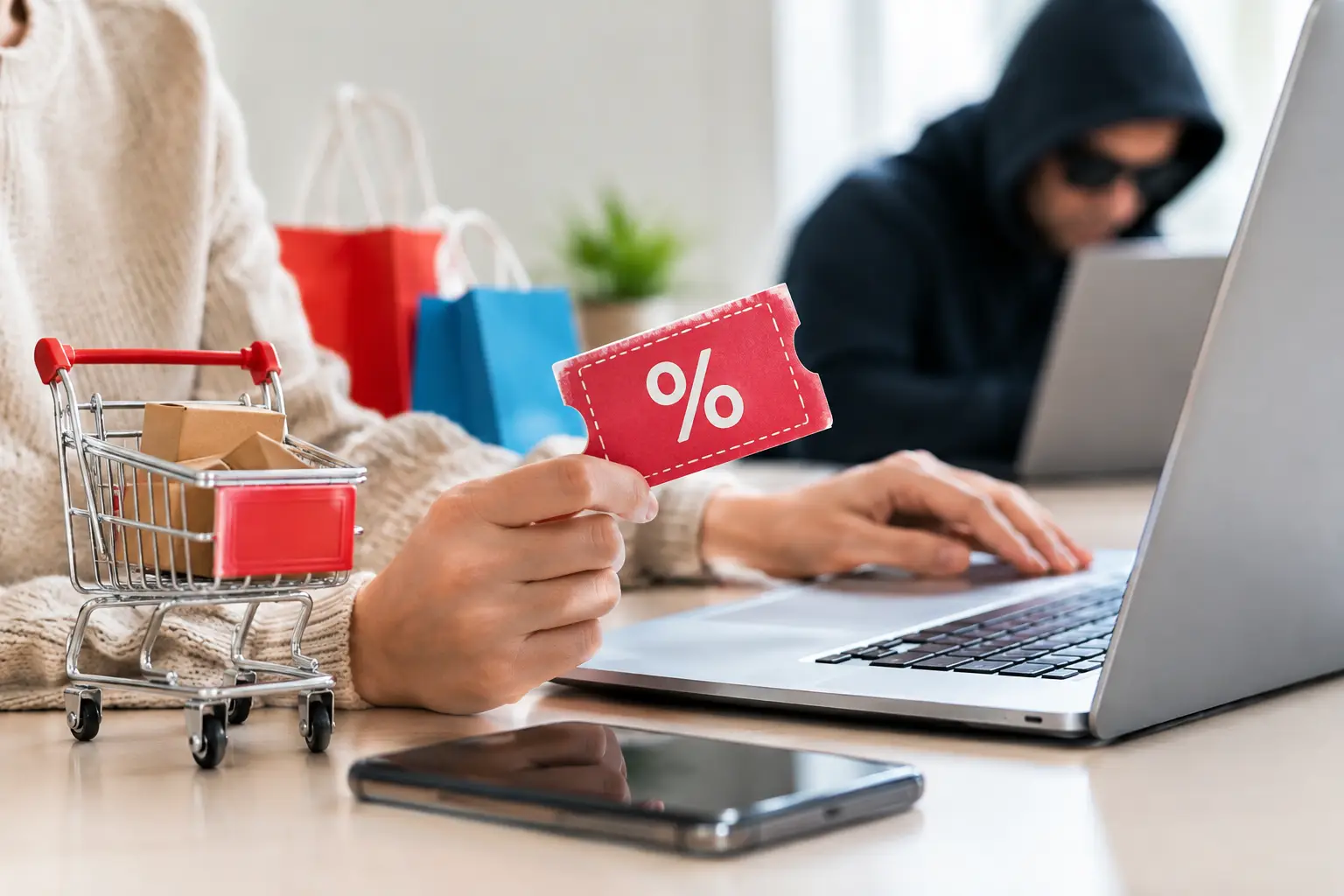
A code that promises 70% off a popular store can feel like a win – until it sends you to a lookalike checkout page, installs an unwanted browser extension, or simply wastes ten minutes at payment. Coupon fraud trends are changing the way shoppers need to evaluate online deals. The goal is not to stop using promo codes. It is to use them with the same quick, practical judgment you apply when comparing prices.
Most coupon problems are less dramatic than a stolen credit card. They look like expired codes presented as active, inflated discounts with hidden restrictions, or a deal page that exists mainly to collect clicks. But some scams go further by asking for account credentials, payment details, or software downloads that no legitimate coupon should require.
Why coupon fraud is growing
Online shoppers expect a discount before checkout, especially for marketplace finds, software subscriptions, wellness products, and creator tools. That demand gives bad actors a simple opening: publish a tempting offer, appear in search results or social feeds, and count on urgency doing the rest.
Coupon fraud also benefits from confusion. A real promotion may apply only to first-time customers, selected products, a minimum order value, or one payment method. A misleading site can copy the headline discount while leaving out every condition. When the code fails, shoppers often assume the merchant is at fault instead of recognizing that the offer was never properly verified.
Some fraud involves coupon abuse rather than fake consumer-facing deals. Stolen promo codes, unauthorized account creation to claim new-user offers, referral manipulation, and return abuse can push merchants to tighten promotion rules. The result can affect honest customers through stricter limits, fewer stackable discounts, or more exclusions at checkout.
The coupon fraud trends to watch
Fake coupon pages built for clicks
The most common problem is the page full of codes that are old, untested, or copied from elsewhere. These pages may use countdown timers, vague claims such as “exclusive deal,” and lists of nearly identical codes to keep shoppers clicking. Their business model may be advertising revenue or affiliate clicks, not helping you save.
A failed code is not always fraud. Merchants can end promotions early or change eligibility rules. The warning sign is a pattern: no visible expiration date, no terms, no indication that a code was tested, and no clear distinction between a verified code and a user-submitted claim.
Lookalike stores and checkout phishing
A more serious tactic starts with a discount that is too good to ignore. The coupon page sends you to a site with a familiar logo, product photos, and a checkout that looks convincing at first glance. Its real purpose is to capture your email, password, card number, or payment information.
Before entering any details, check the store name in the browser address bar. Small spelling changes, extra words, unfamiliar country domains, and awkward URLs deserve caution. A coupon should direct you to the merchant’s official store, not ask you to complete a purchase through an unfamiliar middleman.
Browser extensions that overreach
Coupon extensions can be useful when they automatically test offers at checkout. The trade-off is access. An extension that can read and change data on every website may see more than your cart, depending on its permissions and privacy practices.
Avoid installing an extension just because a coupon page claims it will reveal a secret discount. Read what access it requests, check whether the developer is identifiable, and remove tools you no longer use. A legitimate savings tool should not require your banking password, remote access to your device, or payment outside the store’s standard checkout.
Fake cashback and reward claims
Cashback offers can be harder to verify than promo codes because the reward may arrive weeks after a purchase. Fraudulent pages take advantage of that delay by promising unusually high returns, using unclear tracking terms, or claiming a reward after sending shoppers through an untracked link.
Check the percentage, qualifying products, payout timing, and any exclusions before buying. A real cashback offer should explain how it is earned and when it becomes available. If the claim is “instant cash” but requires a membership fee, an app download, or a survey that never ends, step away.
Social media coupon scams
Short videos and comments can make a deal look credible fast. Scammers may impersonate a brand ambassador, post a fake customer screenshot, or say a code works only if you message them directly. They often use urgency: “Last 20 codes,” “only today,” or “send your order number now.”
Treat direct-message coupon offers carefully. Brands may answer customer questions on social platforms, but they should not need your full card number, login code, or account password to apply a discount. When in doubt, search for the promotion through the merchant’s official channels or a trusted coupon platform.
A faster way to check whether a coupon is real
You do not need a long investigation for every purchase. A few checks can filter out most unreliable offers in under a minute.
First, look for an expiration date and clear terms. “Up to 50% off” may be accurate, but it is not the same as 50% off your entire cart. Check whether the offer is for new customers, specific plans, app orders, bundles, or a minimum spend.
Next, compare the offer with the price on the merchant’s own site. If a code claims to reduce a $100 subscription to $10 but the brand has no mention of a sale, assume there may be a catch. Legitimate deals can be generous, particularly during major sale periods, but extreme discounts need stronger proof.
Then use the code only at the merchant’s official checkout. Copy it, paste it into the promo field, and confirm that the order total changes before paying. Never provide extra personal information to “activate” a code, and do not send money through gift cards, wire transfers, crypto, or person-to-person payment apps to receive a discount.
Finally, keep a record when the purchase is significant. A screenshot of the offer terms and discounted total can help if a cashback reward does not track or a promotion is applied incorrectly. This is especially useful for annual software plans, financial services, or larger electronics orders.
What trustworthy coupon listings look like
Reliable coupon sources make it easier to see what you are getting before you click. They show the merchant, the type of savings, relevant conditions, and expiration details when available. They also separate a direct sale from a promo code, cashback opportunity, bank offer, or wallet offer, because each works differently.
Verification matters, but it is not a permanent guarantee. Codes can reach redemption limits, expire without notice, or be restricted by inventory and location. A trustworthy platform is transparent about that reality rather than promising every code will work for every cart.
CouponRovo focuses on this practical standard: updated offers, clear redemption paths, and code details that help shoppers avoid expired-code clutter. The best deal page should save time as well as money. If it makes you guess where the offer came from or what it requires, it has not done its job.
If you think a coupon scam caught you
Act quickly if you entered information on a suspicious site. Change the password for that account immediately, especially if you reuse it elsewhere. Contact your card issuer if you submitted payment details, review recent transactions, and turn on transaction alerts. If you installed an unfamiliar extension or app, remove it and run a security scan on your device.
If the issue was simply a misleading code, report the listing through the platform where you found it and move on. Do not keep trying random codes from the same unreliable page. The small chance of a discount is rarely worth the lost time, extra tracking, or risk to your account.
Real savings should feel straightforward: a clear offer, a trusted merchant, and a lower total visible before you pay. When a coupon adds pressure, confusion, or requests for sensitive information, keeping your cart and your data safe is the better deal.